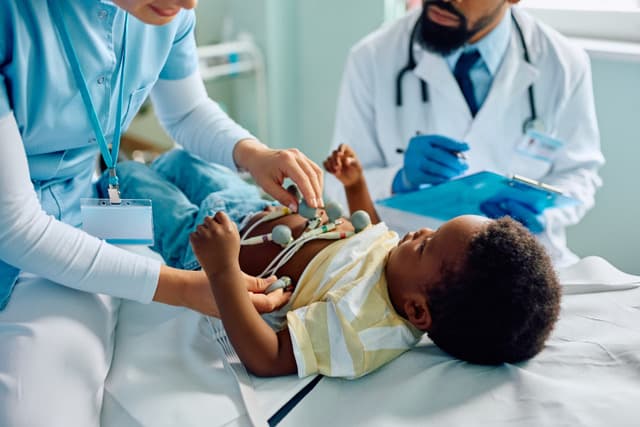
The Science of Exercise Medicine
Exercise medicine is more than fitness advice — it is a clinical discipline built on precise diagnostics, evidence-based therapeutics, and quality-assured laboratory practices spanning health and disease.
Why EMD&T Is a Distinct Clinical Discipline
Exercise Medicine, Diagnostics, and Therapeutics (EMD&T) encompasses the full spectrum of clinical exercise science: from cardiopulmonary exercise testing (CPET) and performance assessments, to evidence-based exercise prescriptions for patients with complex chronic diseases, to laboratory quality assurance and data interoperability.
EMD&T focuses on the proactive use of exercise as a diagnostic and therapeutic tool across the full range of medical conditions. Its scope spans cardiology, pulmonology, oncology, pediatrics, psychiatry, rheumatology, endocrinology, metabolic disease, and beyond.
The clinical evidence supporting this discipline is both vast and rapidly growing. Below is a summary of the evidence across a sampling of multiple diseases.
Evidence Across Multiple Diseases
The disease states outlined here are examples of the role of exercise as a diagnostic and therapeutic tool. This list is not exhaustive.
Heart Failure (HFrEF & HFpEF)
CPET is a cornerstone of risk stratification in heart failure, and peak oxygen uptake measured by CPET is one of the criteria guidelines use for heart transplant listing.51–53,182 Exercise training consistently improves fitness, function, and quality of life in both HFrEF and HFpEF.55–57
morePsychiatric & Behavioral Disorders
Exercise is an effective treatment for major depressive disorder,188 and systematic reviews support it as an addition to care for PTSD189 and many chronic pain conditions,190 while early studies in anorexia nervosa find supervised exercise safe.191 A critical tool in the mental health crisis.
moreCost-Effectiveness Evidence
For institutional leaders considering advanced training program investments, the economic data is compelling.
| Condition / Intervention | Metric | Value | Source |
|---|---|---|---|
| COPD (Pulmonary Rehab) | Average medical costs, Korea, 2016 → 2019 | $18,569 → $11,472 | Choi et al., Chest 2024155 |
| Breast Cancer (Exercise) | Cost per life-year gained | AU $8,894 | Gordon et al., Int J Environ Res Public Health 20202 |
| Type 2 Diabetes (Aerobic + Resistance) | Cost per QALY vs. no exercise | CA $37,872 | Coyle et al., DARE trial 2012156 |
| Heart Failure (Cardiac Rehab) | All-cause hospital admissions, first year | 31% fewer | Molloy et al., Cochrane Review 2024157 |
| Physical Inactivity (Prevention) | Share of US health care spending | 11.1% ($117B a year) | Carlson et al., Prog Cardiovasc Dis 2015137 |
Addressing Disparities in Exercise Medicine
Health equity is central to the Academy's mission. Social determinants of health profoundly influence exercise prescriptions, monitoring, and access to rehabilitation services.8–11
The case of sickle cell disease illustrates this gap: about 100,000 people in the US live with sickle cell disease,158,159 yet a PubMed search of exercise clinical trials in children and adolescents (1966–2021) found only 12 publications on sickle cell disease, compared with 121 on cystic fibrosis, a far less common condition.
Advanced training in exercise medicine diagnostics and therapeutics can begin to address health care disparities by building a cohort of physicians with the knowledge base to consider the full context of patient exercise behavior as well as address knowledge gaps and advocate for equitable exercise medicine programs at institutional and community levels.